


Bhutan does not unfold like a checklist. It reveals itself slowly — in altitude and silence, in rituals that continue without performance, in landscapes that do not compete for attention, and in daily life that moves without urgency.
For first-time visitors, Bhutan is not experienced through sight alone. It is entered through rhythm, presence, and quiet participation.
What follows are not attractions. They are ways of stepping into that rhythm.
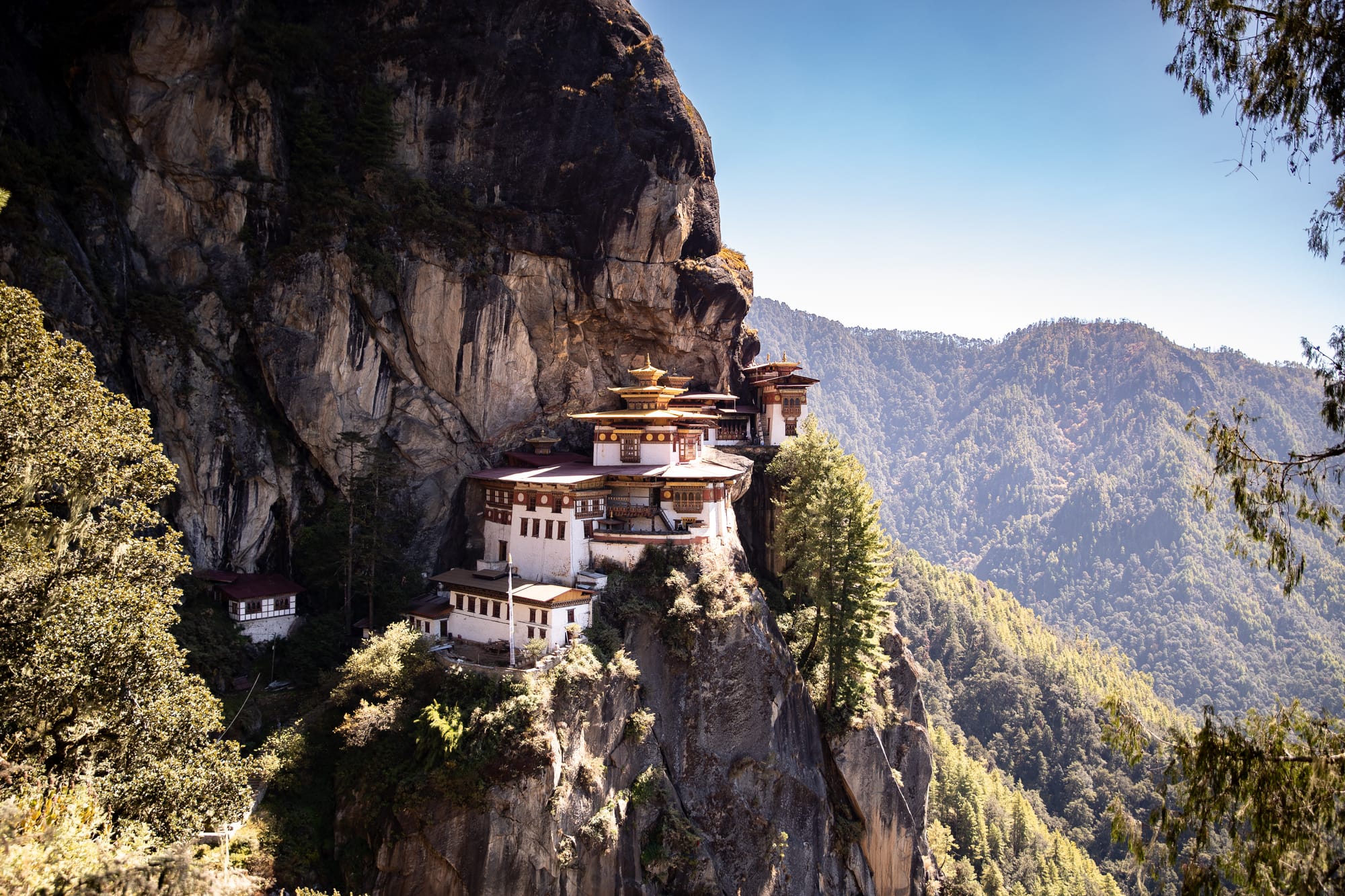
1. Paro Taktsang — The Climb Into Stillness
Paro Taktsang rises above the Paro Valley as if it has never been placed there, but revealed.The path upward winds through pine forest and open mountain air, where each step gradually removes distance from the valley below. The climb is steady and unforced, shaped more by breath than by speed.
At the cliff’s edge, the monastery appears suspended between rock and sky — not separate from the landscape, but held within it. It is one of the most recognized Bhutan hiking experiences, yet its impact is not in arrival, but in the process of getting there.
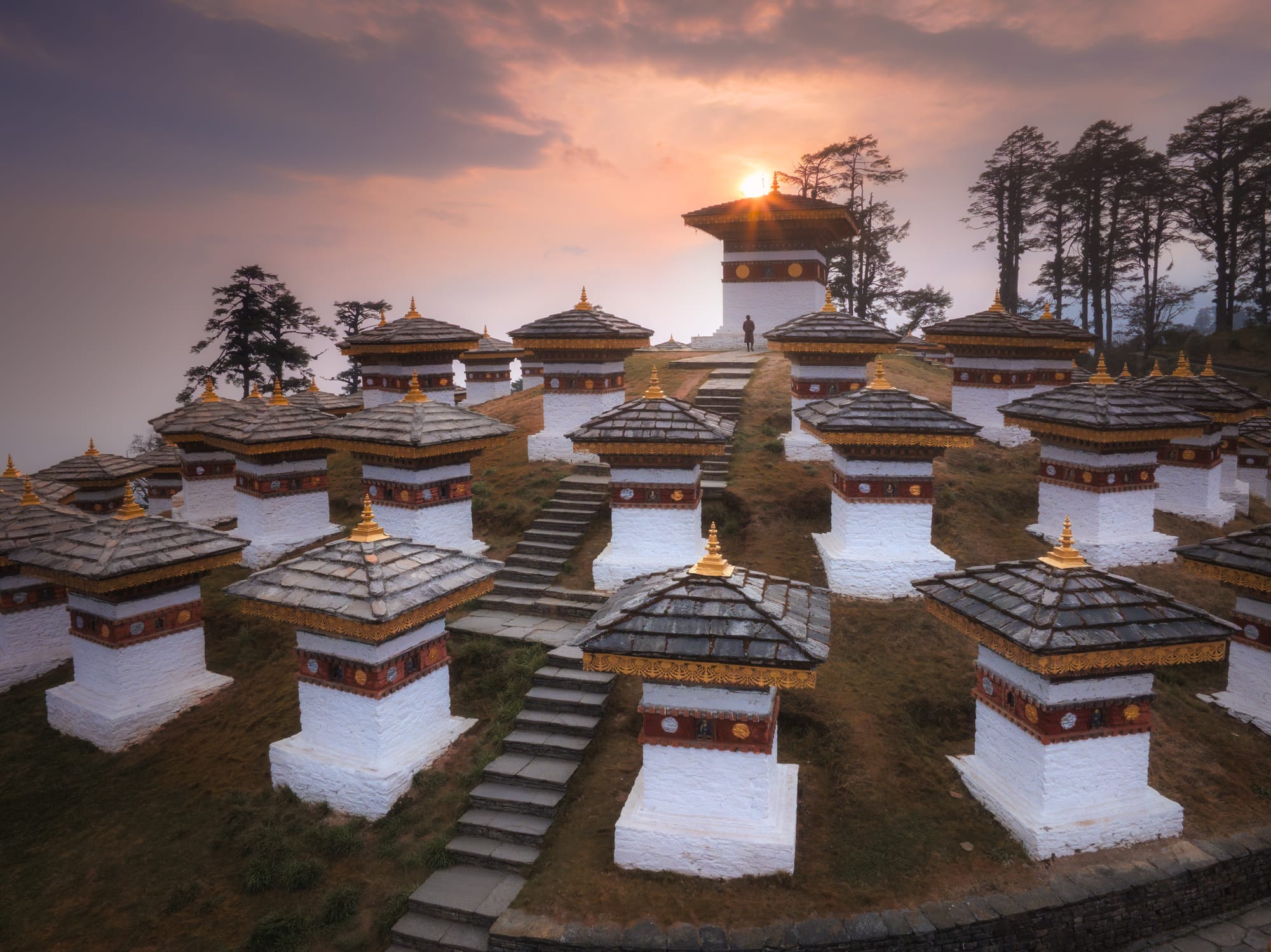
2. Dochula Pass — Where the Himalayas Appear Without Announcement
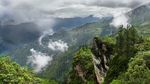
At 3,100 meters, Dochula Pass holds 108 chortens in quiet formation along the ridge.
On clear mornings, the eastern Himalayas appear without warning, suspended above shifting layers of cloud. On other days, they remain hidden, as if choosing not to be seen. Nothing here is fixed. Even the view is temporary. It is one of the most memorable scenic routes in Bhutan, not because of what is guaranteed, but because of what is never promised.
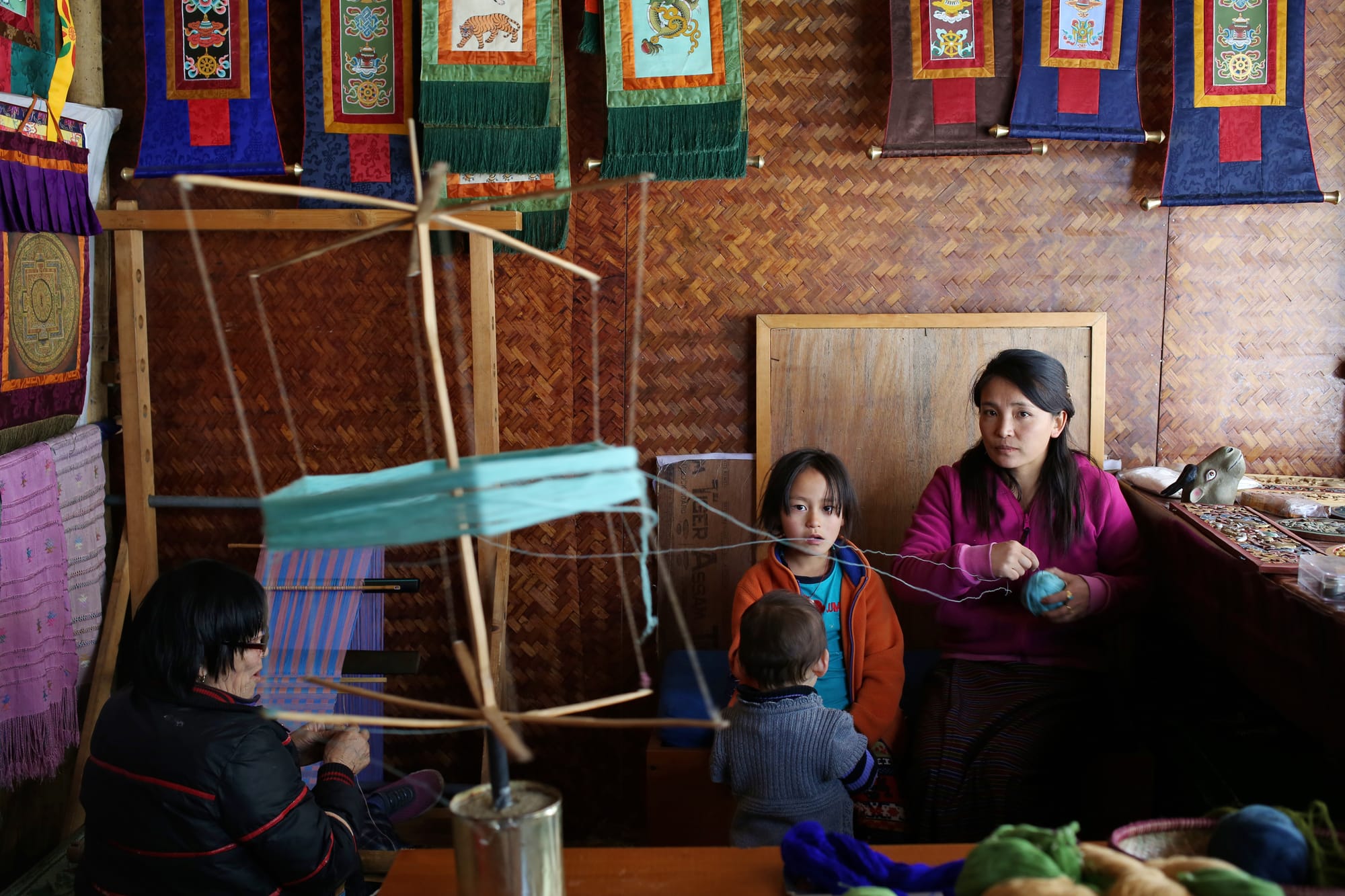
3. Traditional Handicraft Encounter — Where Skill Lives in Silence
In small workshops and family spaces, craft is not presented as art. It is practiced as continuity. Weaving, carving, and textile work unfold through repetition rather than instruction. Hands move with familiarity, repeating patterns that have been carried across generations.
Thread becomes structure. Wood becomes memory. Color becomes patience. For first-time visitors, what remains is not the finished object, but the quiet atmosphere of making — steady, unhurried, and deeply rooted in time.
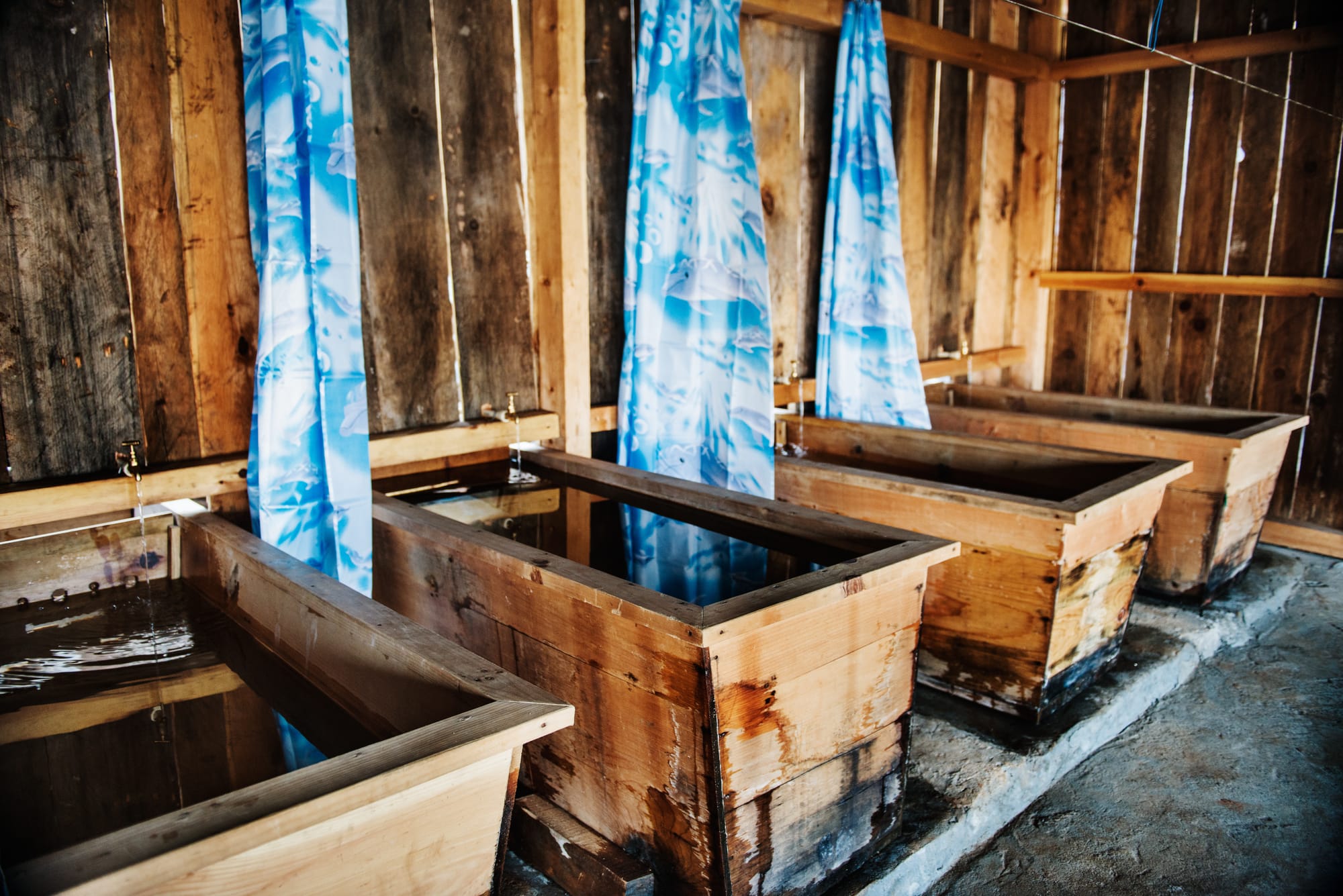
4. A Traditional Hot Stone Bath — Heat, Stone, and Release
In a wooden room warmed by fire, river stones are heated until they glow before being placed into water.
The sound is minimal. The effect is gradual. Heat rises slowly through the water, shifting the body into stillness without force. This traditional Bhutan wellness practice, known locally as dotsho, has long been part of rural life.
It does not feel designed for luxury. It feels shaped by necessity that has softened into care.
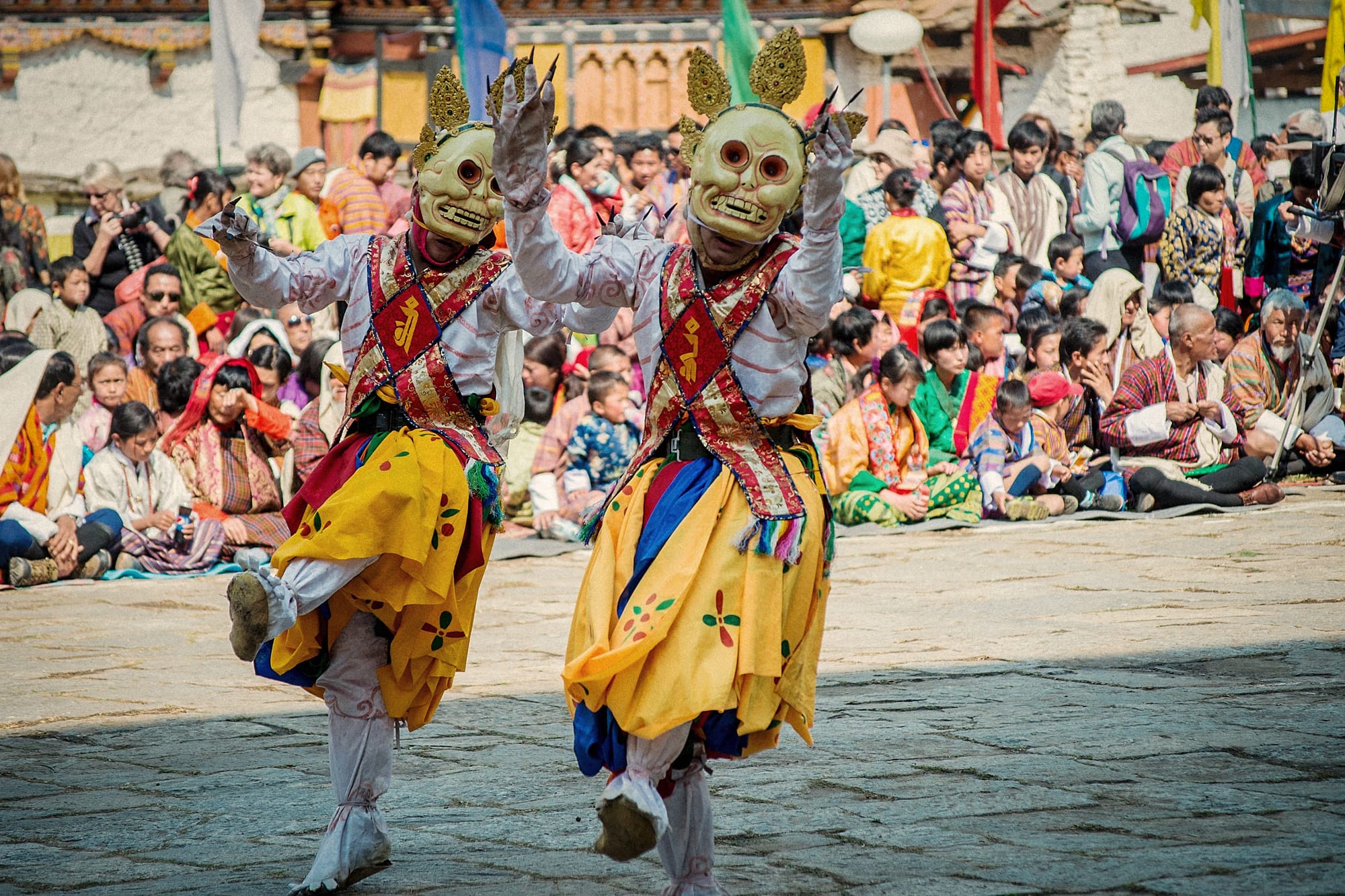
5. Tshechu Festival — When Ritual Becomes Movement
Within monastery courtyards, masked dancers move in measured rhythm.
Their motion is precise, but not theatrical. It carries repetition rather than performance, shaped by teachings that have been passed through generations.Families gather in traditional dress, not as spectators, but as part of the same continuity. Drums and horns define space rather than fill it.
It is one of the most important Bhutan cultural festivals, where belief, memory, and community remain visibly connected.
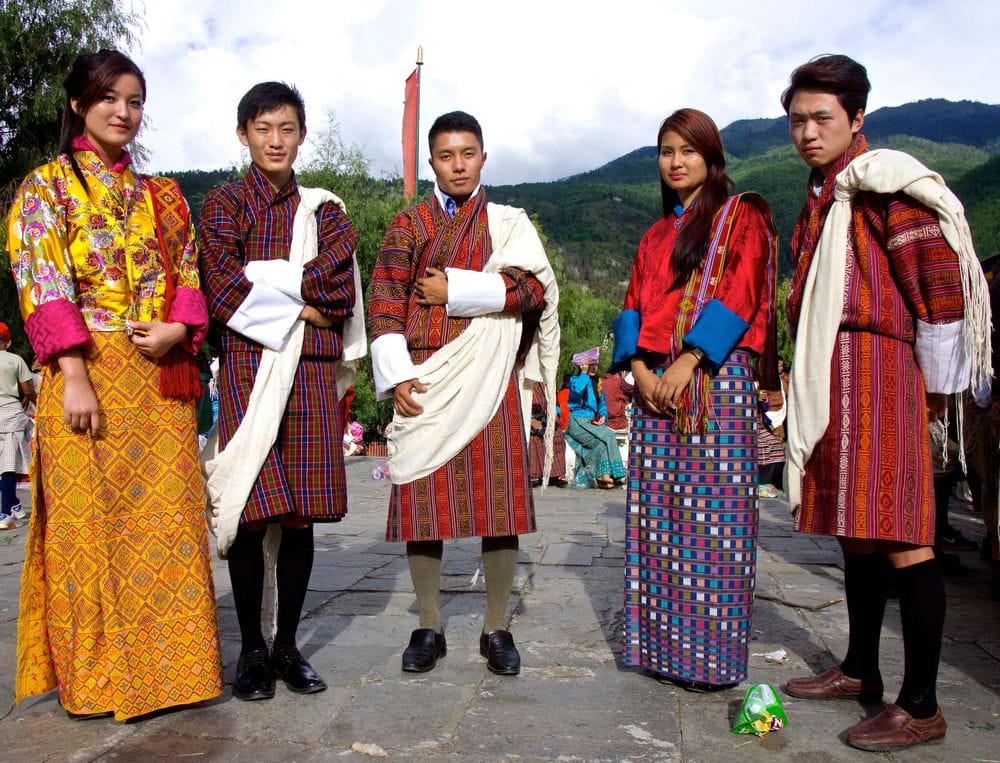
6. Gho and Kira — Clothing as Everyday Presence
The gho and kira are not reserved for ceremony. They move through daily life — across offices, fields, and streets — without distinction between formal and informal.
Fabric folds naturally into movement, shaping posture and presence without separating tradition from routine. For visitors, it offers a quiet insight into how cultural identity remains integrated rather than preserved behind glass.
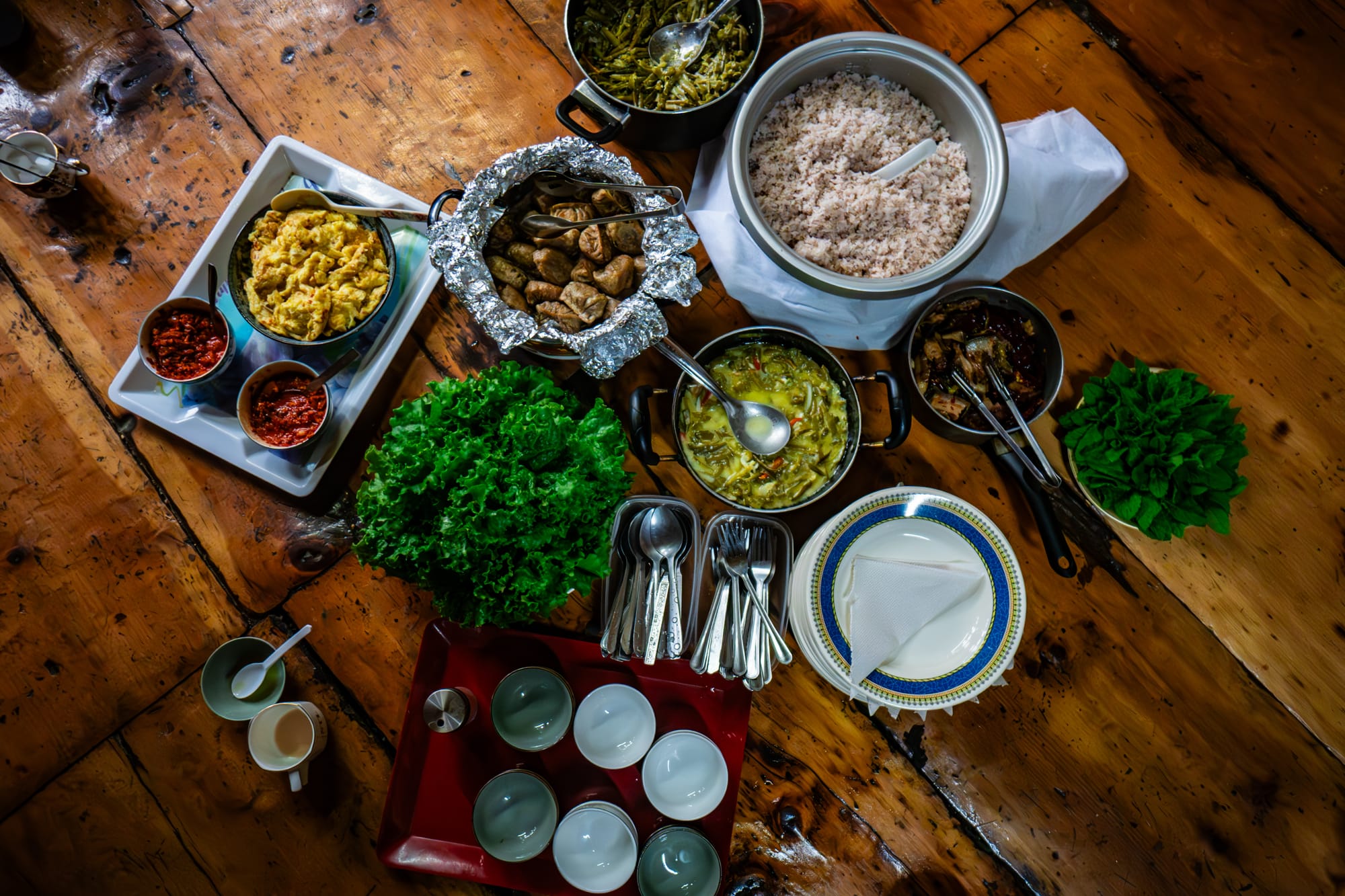
7. A Farmhouse Evening — Life Around the Fire
In rural homes, the kitchen fire remains at the center of everything. Meals are prepared without emphasis, shaped by what the season allows. Conversations form slowly, often without direction or conclusion.
Time does not feel segmented here. It feels gathered. This is Bhutan rural life at its most ordinary — and most revealing.
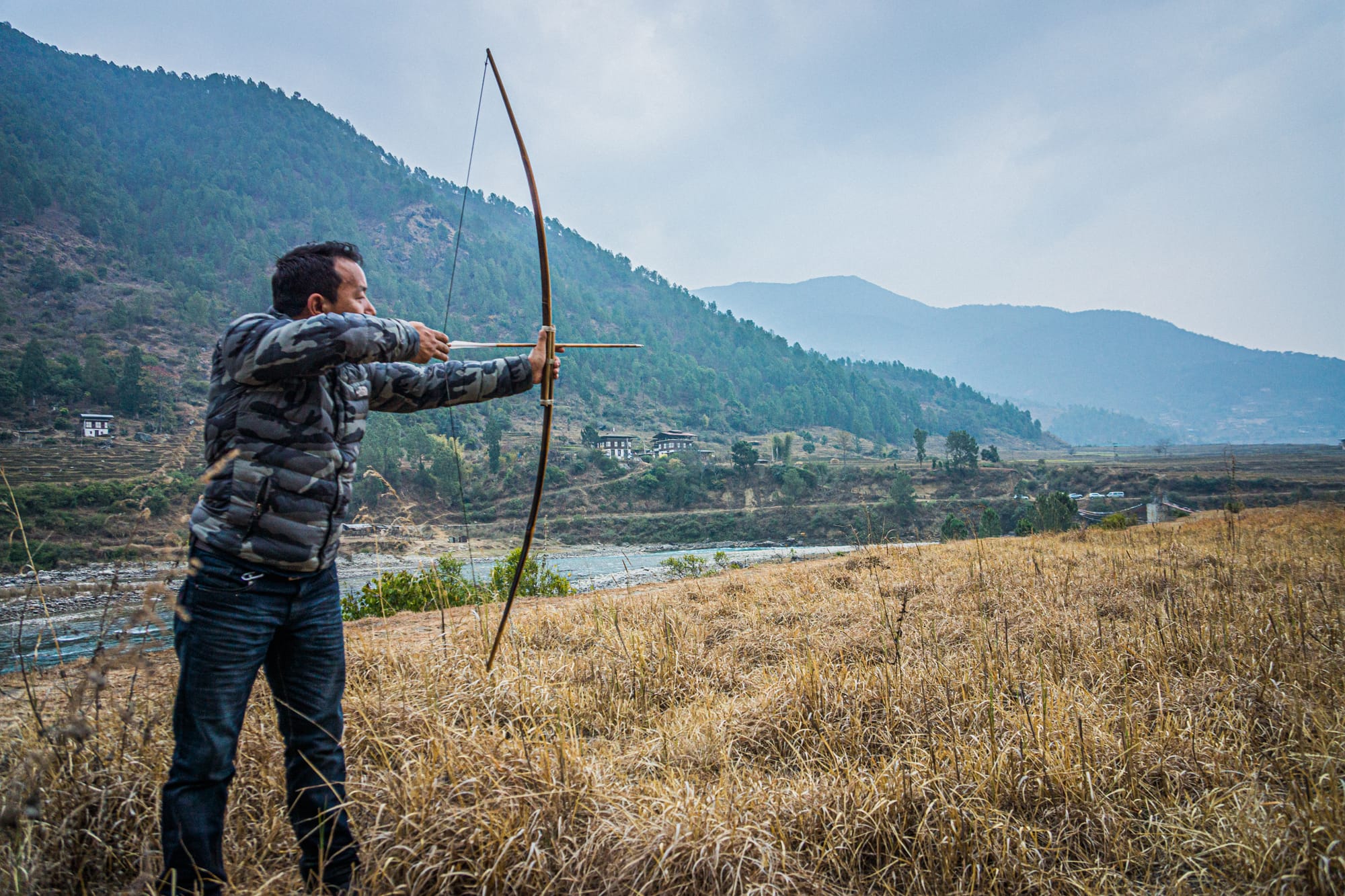
8. Archery — Distance, Focus, and Shared Rhythm
Archery fields stretch across open land where distance feels almost exaggerated.Arrows travel far, but the real experience happens between shots — in laughter, teasing, music, and collective attention. It is both sport and gathering, precision and celebration existing at once.
For first-time visitors, it is often surprising how social the rhythm of it feels. Nothing is isolated. Everything is shared.
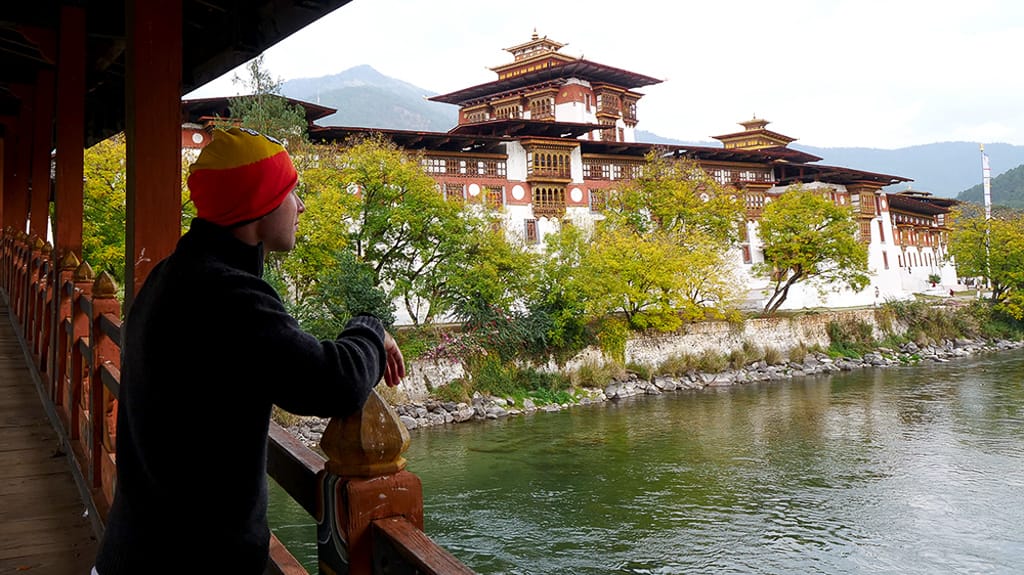
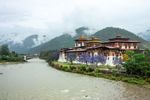
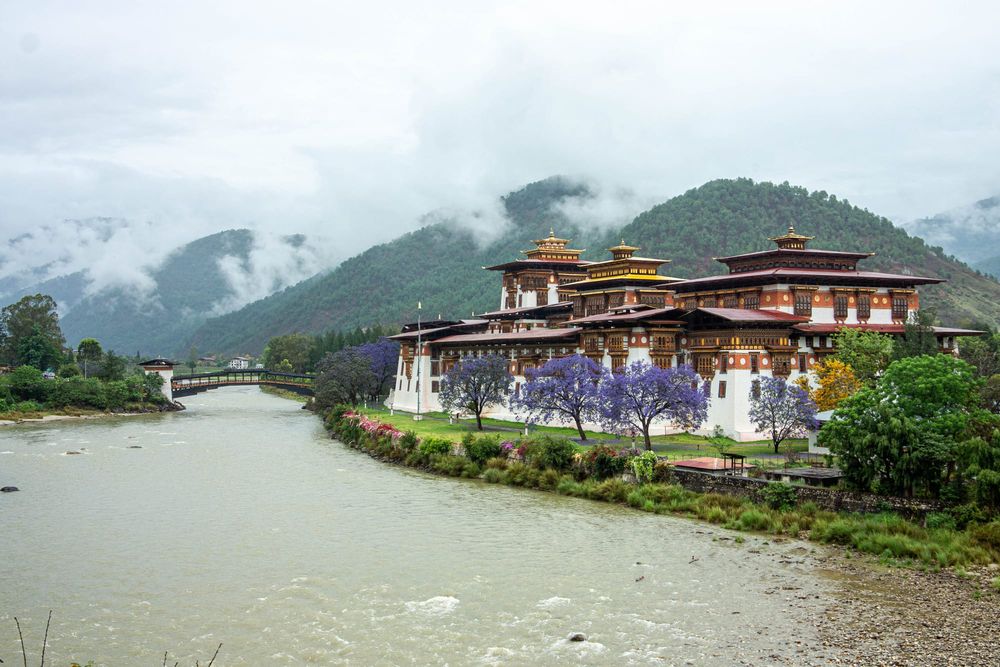
9. Punakha Dzong — Where Rivers Meet Structure
At the confluence of two rivers, Punakha Dzong stands with quiet permanence.
Whitewashed walls reflect shifting light, while wooden details carry centuries of continuity. Water moves constantly around it, reinforcing rather than interrupting its presence. It remains one of Bhutan’s most significant architectural expressions, shaped by both geography and time.
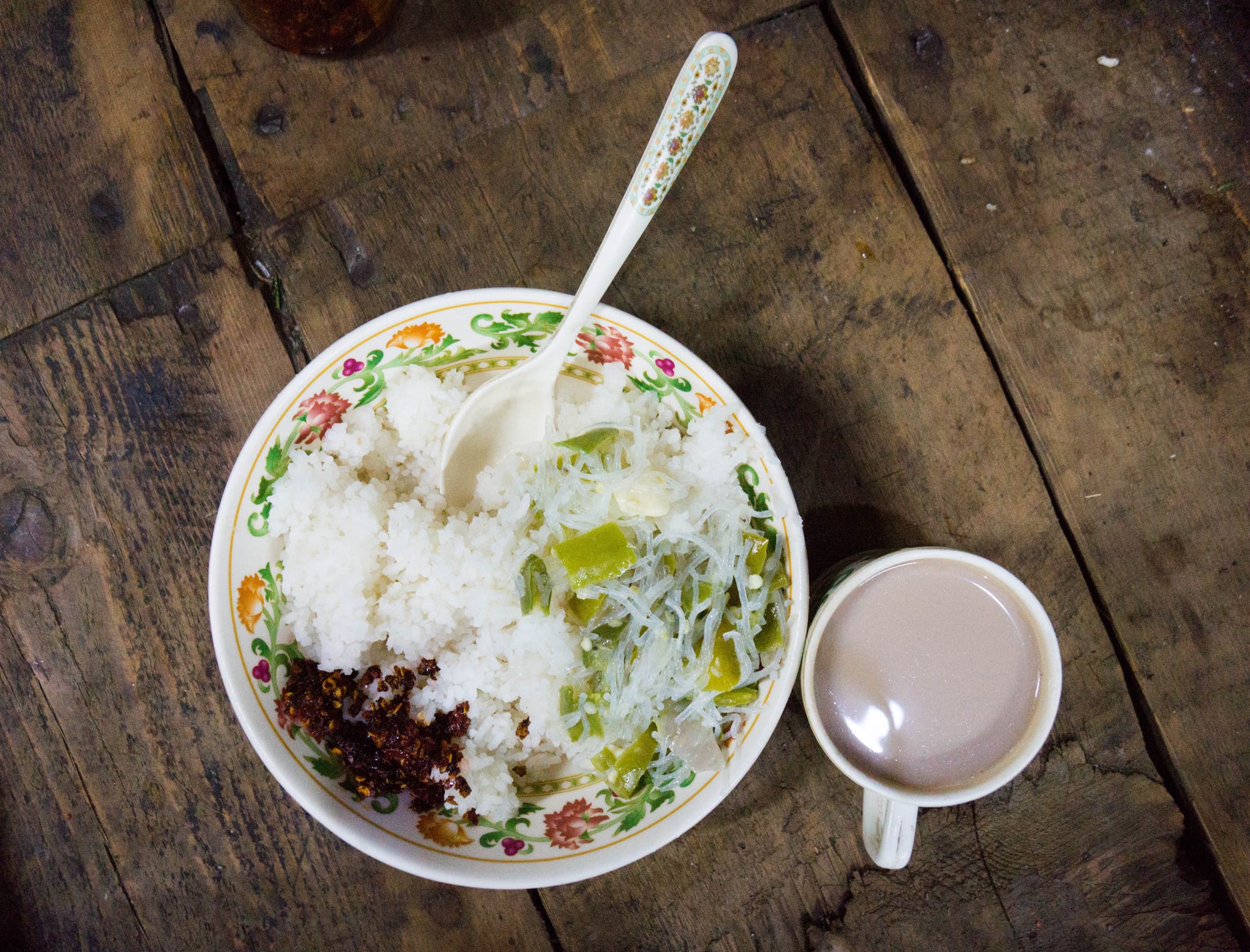
10. Suja — A Cup That Adjusts the Pace of Time
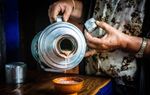
Butter tea arrives without introduction.
Its salt, warmth, and texture do not align with familiar expectations of taste. Instead, it invites adjustment — a soft recalibration of attention. Shared in homes and gatherings, suja reflects Bhutanese hospitality not as formality, but as presence.
Conversation slows around it. Silence becomes easier within it.
Beyond What Is Seen
What remains after Bhutan is rarely visual. It is rhythmic — how movement feels slower, how silence becomes noticeable, how distance feels meaningful rather than empty.
For first-time visitors, Bhutan is not something that is consumed or completed. It is something that gradually settles into awareness. And once it does, it does not leave in the same way it arrived.
About MyBhutan | Luxury Travel & Private Journeys in Bhutan
MyBhutan is a boutique luxury travel house specializing in private journeys across Bhutan. We curate bespoke Bhutan experiences for discerning travelers seeking rare access, cultural depth, and refined Himalayan hospitality.
From sacred monasteries to our exclusive hidden Sangwa Camps, each journey is shaped through personal consultation and long-standing local relationships — offering access beyond conventional Bhutan tour experiences.
With MyBhutan, Bhutanese luxury is homemade and handmade — defined by discretion, authenticity, and meaningful connection.
Photography by Jesse Montes | Daniel Kordan | Glen Thomson | Matthew DeSantis | Michael Marquand | David Hoffmann
All photographs taken while on assignment with MyBhutan